

Fostering networks: Advancing insights into Epidermolysis Bullosa disease through training
How a sponsored scholarship to attend a dermatology genomics course became the catalyst for an internationally collaborative research project.
Genomics of Dermatology 2022 group photo
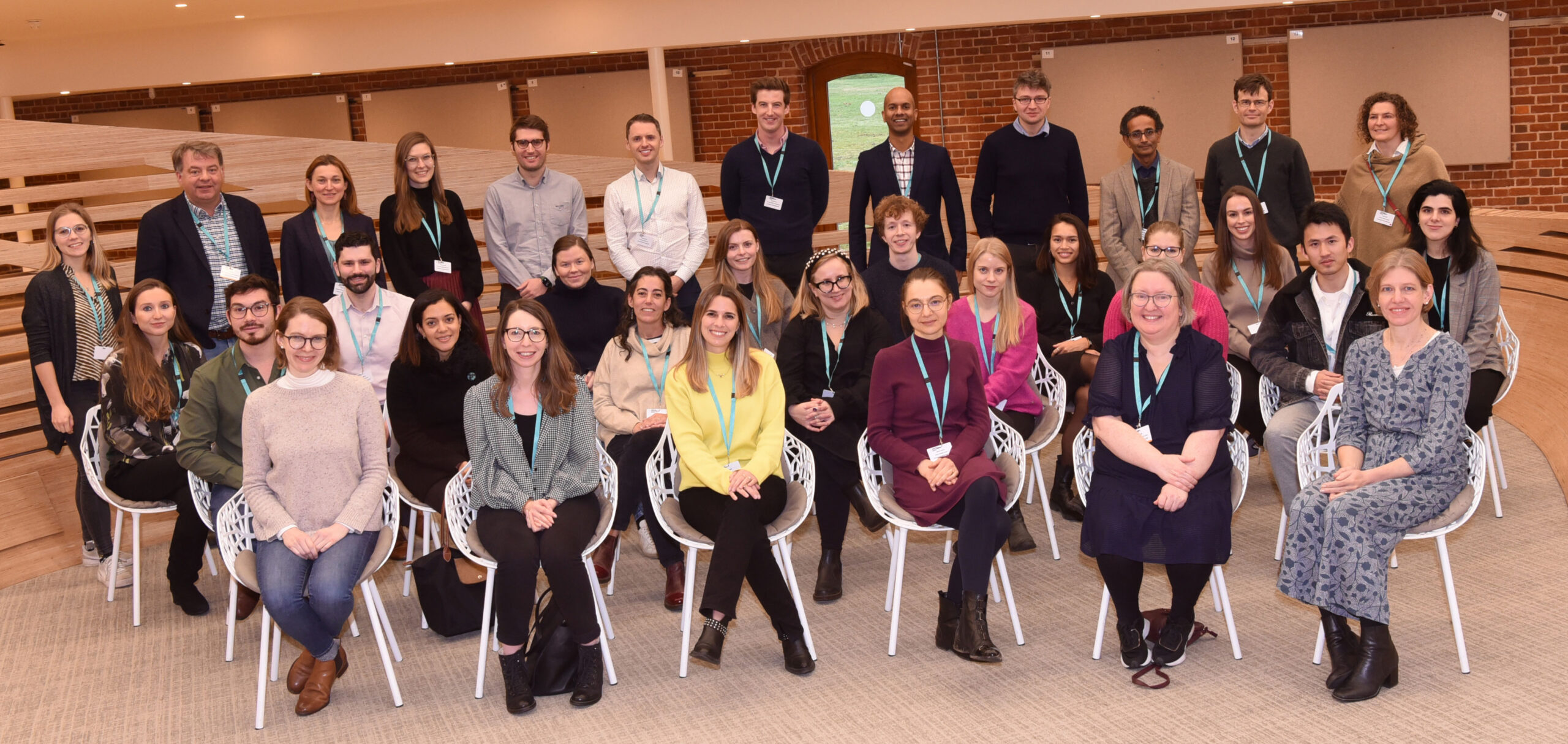
Funded through a British Association of Dermatologists (BAD) scholarship, Esteban Chacón-Solano, an early career postdoctoral researcher working at the Instituto de Investigación Sanitaria de la Fundación Jiménez Díaz (IIS-FJD/CIEMAT/CIBERER), Madrid, attended Wellcome Connecting Science’s 2022 Genomics for Dermatology discussion course.
Having recently completed a PhD focusing on fibroblast heterogeneity, Esteban was eager to explore how new and emerging genomics approaches could shape his future work, and make new connections to build his research network.
It was a true honour to have participated in the discussions on the course. I’ll always remember the exceptional quality of the talks and speakers, including Professors Edel O’Toole and Eli Sprecher.
Esteban Chacón-Solano, University Carlos III of Madrid (UC3M), Spain
Inspired by a presentation given by Dr Emanuel Rognoni on ‘fibroblast heterogeneity in skin homeostasis and disease’, Esteban saw an opportunity to gain up-to-date perspectives of the diverse roles that fibroblast subpopulations play in a variety of skin diseases.
Given the close alignment with my recent PhD research, I approached Emanuel to ask some specific scientific questions and exchange ideas. We exchanged email addresses and stayed in touch after the course. He also kindly provided feedback on one of my ongoing projects at the time.
This casual encounter over coffee during a networking break has since blossomed into an established and international research collaboration, involving many leading experts advancing studies into Epidermolysis Bullosa (EB).
Leveraging multidisciplinary expertise to advance EB research
Esteban’s PhD, having primarily focused on the role of dermal fibroblasts as cellular modulators of disease severity and progression in Recessive Dystrophic Epidermolysis Bullosa (RDEB), led to the identification of several altered signaling pathways, and potential therapeutic targets, that could help guide the development of new therapeutic strategies.
At Queen Mary University London (QMUL), Emanuel Rognoni’s research team were using omics techniques to study the gene expression(s) changes present in fibroblasts from skin diseases including keloids, squamous cell carcinoma, and Junctional EB.
This presented an excellent opportunity to advance EB research by merging the unique insights developed through Esteban’s PhD studies with Emanuel’s expertise in the field, including the application of transcriptomics.
From there, a formal collaboration was born, with Esteban joining Emanuel at the Blizzard Institute (QMUL), as a visiting researcher. Professor Edel O’Toole and Dr Matthew Caley joined them in the pursuit of grant funding to begin a new research project.
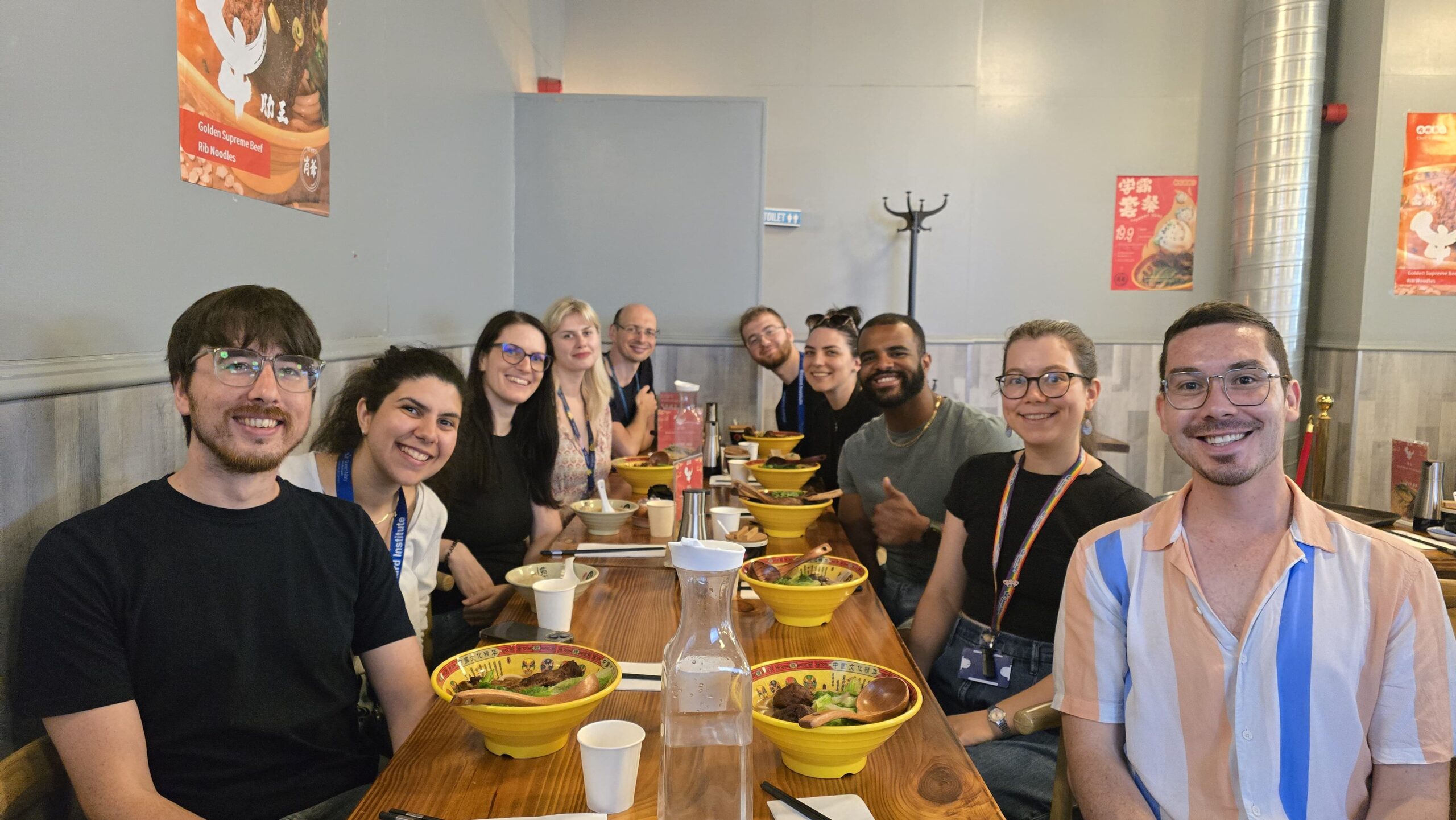
A new research group was born. In the photo below Esteban features at the front right.
We wrote a research proposal for an international mobility fellowship (José Castillejo Grant, funded by the Spanish Ministry of Science and Universities) to join them for six months as a visiting researcher. We were awarded to study cellular heterogeneity in EB, drawing on my background in RDEB and the host group’s expertise in Single-cell RNA sequencing (scRNA-seq).
The results so far...
Together, they are working to decipher the cellular constellation of the skin in patients and animal models with RDEB. Understanding how specific cell subpopulations drive particular aspects of disease pathology is essential to guide the rational design of targeted, evidence-based therapies. Although the project is still in the early stages, their analysis has pinpointed an imbalance in immune cell populations and identified enhanced intercellular communication networks, largely driven by a distinct subset of dermal fibroblasts.
The work at the Blizzard Institute (QMUL) came to a close in August 2025, and Esteban is now continuing with the project’s bioinformatics analysis from Madrid, where he works as an Assistant Professor in the Department of Bioengineering, University Carlos III of Madrid (UC3M).
The experience has been truly rewarding so far. We are committed to building long-term partnerships, seeking joint funding opportunities, and advancing collaborative research aiming to improve the quality of life for patients with EB.
Strengthening early careers in genomics
The research project isn’t the only achievement to come out of a chance meeting at Genomics for Dermatology 2022. Three years on, Esteban now leads his own research group, consisting of a lab technician and two doctoral fellows, demonstrating the immense value that comes from networking at research meetings and training sessions.
Collaborations like the one with Emanuel not only help us move our research forward, but they also provide valuable support and international visibility, which were essential for strengthening my early-stage academic career. I’m truly grateful to Edel, Matthew and Emanuel for their trust, and for supporting my development as a young PI.
I am especially grateful to the course and Wellcome Connecting Science for creating spaces where these kinds of connections and collaborations can begin. The course was not only a place of learning, it was also the catalyst for a meaningful scientific partnership
Sign up to stay up to date about all our conferences and courses
 Back to top


