



Genome Sequence Analysis - Asia
17–22 May 2026
Khon Kaen University, Genome Institute of Singapore, National University of Singapore, Philippine Genome Center, All India Institute Of Medical Sciences, Delhi and Cancer Research Malaysia
Learn to analyse sequencing data to address a wide range of biological questions
Summary

Join us for our Google DeepMind sponsored Genome Sequence Analysis course, in one of our partner classrooms in Asia.
Enhance your biological research skills by learning the latest high-throughput sequencing techniques, and implementing bioinformatics workflows customised to your own work.
Target audience
This course is open ONLY to applicants currently based in Singapore, Malaysia, Thailand, India, or the Philippines.
This offering is being delivered as a regional pilot, with the intention of refining the model and expanding it to additional countries across Asia and the Pacific in future iterations. To stay informed about future deliveries and regional expansion, please sign up to our mailing list.
Locations
Successful applicants will join us at one of five remote-linked classrooms, based at one of our partner institute sites: Khon Kaen University in Thailand, A*STAR’s Genome Institute of Singapore (GIS), National University of Singapore (NUS), the Philippine Genome Center , All India Institute Of Medical Sciences Delhi (AIIMS) and Cancer Research Malaysia.
Through coordinated delivery and shared expertise, our course provides a hands-on introduction to genome sequence analysis, equipping participants with the essential skills needed to assess and analyse sequencing data and to perform common analytical workflows.
Learning outcomes
What will you be able to do?
After attending this course, participants will be able to:
- Use the Linux command-line and advanced Linux commands for automating bioinformatics tasks
- Evaluate the results of quality control (QC) analysis of high throughput sequencing data
- Explain the algorithmic concepts underlying short-read alignment and variant calling, and apply relevant software tools in practice.
- Develop bioinformatics workflows
Programme
Programme
The hands-on programme will cover several aspects of genome sequence data analysis, including lectures, discussions and practical computational sessions covering the following:
- Introduction to sequencing technologies
- Introduction to the Linux command line
- Linux for bioinformatics
- Genome sequencing data formats and tools
- Sequence alignment and quality control (QC)
- SNP/indel theory and practical
- Structural variation theory and practical
- Sequencing data visualisation with the Integrated Genomics Viewer
- Genome assembly
- Bioinformatics workflow essentials
- Participant projects and presentations (final day)
*Please note: The practical sessions will be taught exclusively through Linux. Therefore, participants are required to have some familiarity with the Linux operating system. This will be essential for participants to fully benefit from the course. With this in mind, we will provide comprehensive pre-course material via our learning management system in the weeks immediately before the course. Additionally, there are numerous online introductory tutorials to the Linux operating system and command line, including:
http://www.ee.surrey.ac.uk/Teaching/Unix
http://swcarpentry.github.io/shell-novice/
The course should not be considered a complete education in the theoretical and mathematical foundations of the topics.
Instructors and speakers
Scientific Organising Committee

Jacqueline Keane
Wellcome Sanger Institute, UK

Thomas Keane
EMBL-EBI, UK

Arporn (Koi) Wangwiwatsin
Khon Kaen University, Thailand

Adaikalavan Ramasamy
Genome Institute of Singapore

Gokce Oguz
Genome Institute of Singapore

Burton Chia
Genome Institute of Singapore

Jaishree Tripathi
University of Singapore

Carlo Lapid
Philippine Genome Center

Pranay Tanwar
All India Institute Of Medical Sciences, New Delhi
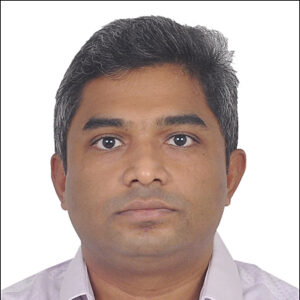
Ganesh Kumar Viswanathan
All India Institute Of Medical Sciences, New Delhi

Harsh Goel
All India Institute Of Medical Sciences, New Delhi
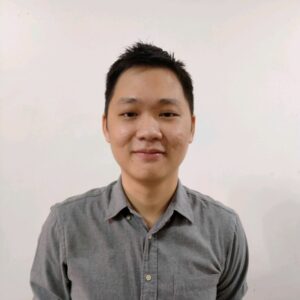
Jia Wern Pan
Cancer Research Malaysia, Malaysia
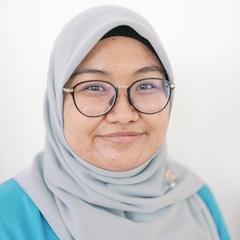
Haslina Makmur
Cancer Research Malaysia, Malaysia
Wellcome Connecting Science team

Monica Abrudan
Wellcome Connecting Science

Martin Aslett
Wellcome Connecting Science

Vaishnavi Gangadhar
Wellcome Connecting Science

Karon Chappell
Wellcome Connecting Science

Isabela Malta
Wellcome Connecting Science

Alice Matimba
Wellcome Connecting Science
Registration
Prerequisites
This course is open ONLY to applicants currently based in Singapore, Malaysia, Thailand, India, or the Philippines. Applicants should be postdoctoral scientists, PhD students, junior faculty members or clinicians/ healthcare professionals actively engaged in or soon to commence research involving next generation sequencing data analysis. The course will be taught in English.
This offering is being delivered as a regional pilot, with the intention of refining the model and expanding it to additional countries across Asia and the Pacific in future iterations. To stay informed about future deliveries and regional expansion, please sign up to our mailing list.
How to Apply
- Start your application
- Click on the “Apply” button above to start your application. Please note that places are limited and will be awarded based on merit.
- Demonstrate the course’s relevance to your work
- Our courses are in high demand. Please provide an outline of your work (research project(s) and/ or clinical/ healthcare activities). It is essential to clearly explain how the skills you will acquire from the course are directly relevant to your current role and beneficial to your work, research, or organisation. Preference will be given to applicants who have genomic sequence data to analyse.
- Letter of recommendation
- Applications must be supported by a letter of recommendation from a sponsor or professional referee such as supervisor, line manager, or head of department. The statement should be tailored to indicate their support of your application and how the course could be of benefit. This statement must be uploaded as a PDF document to the online registration system by the application deadline. Applications without a supporting statement will not be considered.
- Need Help?
- If you have any questions or encounter any problems with the online application process, please contact us for assistance.
Cost
Bursaries
We are unable to provide bursaries for travel and accommodation for this course.
 Back to top


